Real case · Before / After

A Smile Transformed with e.max Veneers

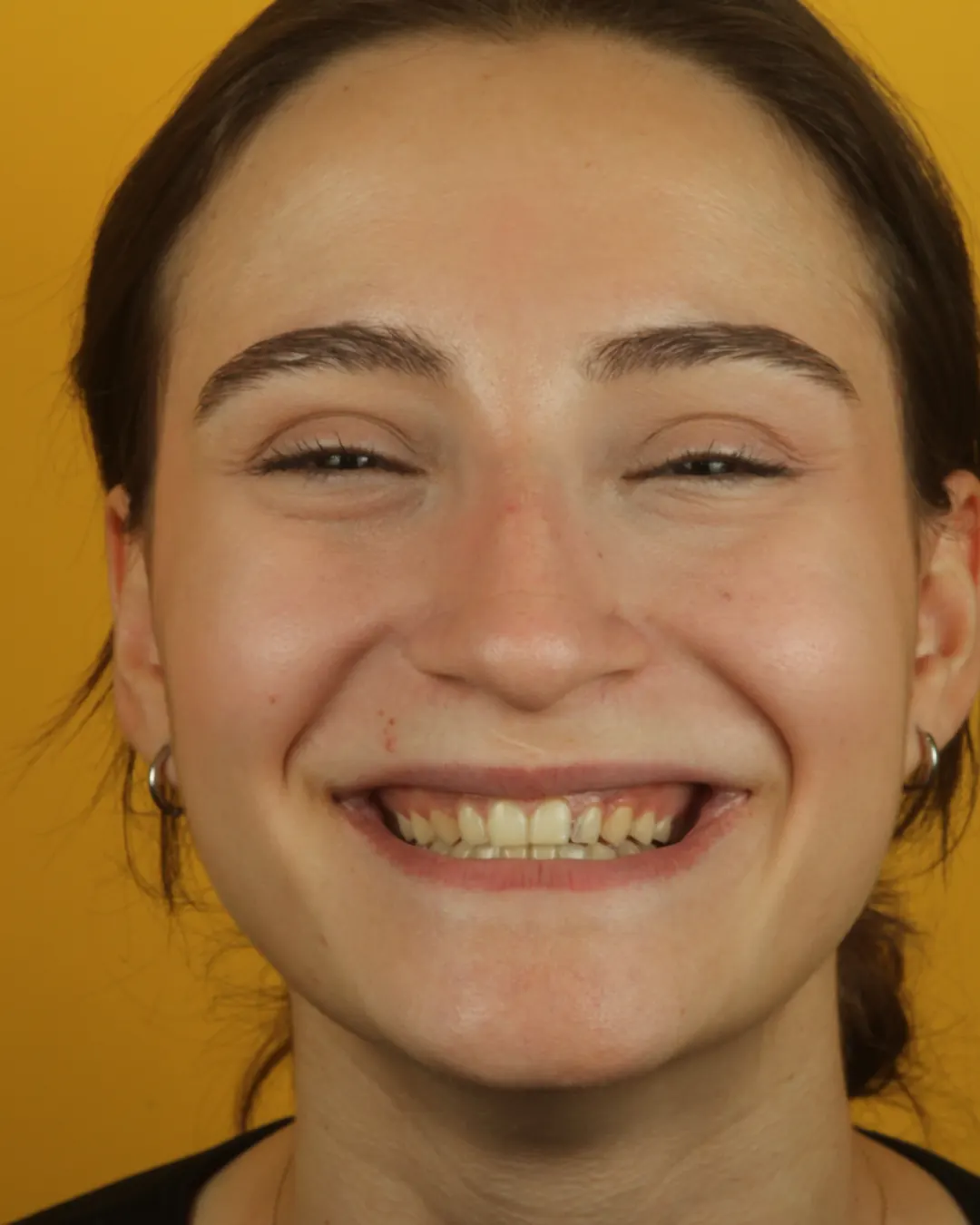
A porcelain veneer is a wafer of porcelain 0.3 to 0.5 mm thick, bonded to the front surface of the tooth; around ninety per cent of the healthy tooth tissue is preserved. For people looking to have veneers in Istanbul, the process at our clinic runs on planning by a specialist and a mock-up trial. In this case, treated at our clinic, only 0.3 to 0.5 mm of enamel was reduced from the front of the teeth and the work was completed with IPS e.max veneers made in our in-house laboratory.

Case details: Treated by Dr G. Cansu Öztürk · Material Ivoclar IPS e.max · Preparation 0.3–0.5 mm · Made in our in-house laboratory · GC Clinic, Nişantaşı

Drag the handle on the image to the right to see the difference between before and after for yourself.

Message us for a free consultationMessage us on WhatsApp

Smile after e.max veneers — a real GC Clinic case

Smile before veneers — a real GC Clinic case
⇄
BEFORE
AFTER

Slide to compare. Results vary from person to person.

Aesthetic dentistry · Nişantaşı

Dental Veneers: Porcelain Laminates, E.max and Zirconia

A dental veneer is an aesthetic treatment in which a thin layer of porcelain or composite is bonded to the front of the tooth to correct its colour, shape and alignment. At our clinic in Nişantaşı, the options — porcelain laminates, IPS e.max veneers, zirconia crowns, Lumineers and composite bonding — are planned with a minimal-prep, conservative approach that keeps the tooth alive.

What we aim for with veneers is a natural smile, not an artificial one. Rather than the over-white, moulded look, we plan an individual smile design that suits your features, your lip line and the shape of your teeth.

For anyone searching for dental veneers in Istanbul, and in Nişantaşı in particular: GC Clinic is a boutique practice that has been carrying out aesthetic dentistry in the Nişantaşı district of Istanbul since 1985. All our porcelain laminates are made from Ivoclar E.max (emax) ceramic, the reference material in this field, with its natural translucency and more than fifteen years of clinical data behind it.

Types of veneer

The types of veneer and how they differ.

Porcelain Laminate

A thin porcelain wafer bonded to the front of the tooth after a reduction of about 0.3 to 0.5 mm. It gives natural translucency with the least possible loss of tooth and is the option of choice for aesthetic work on the front teeth.

Ivoclar E.max (emax) veneers

Ivoclar E.max (IPS e.max, lithium disilicate) is a pressed ceramic that combines high strength with aesthetics. It is our clinic’s default veneer material, with more than fifteen years of clinical data behind it.

Zirconia crowns

Porcelain over a zirconia framework. Used on back teeth and wherever more strength is needed. For the aesthetic zone at the front, a porcelain laminate usually gives a more natural result.

No-prep veneers (Lumineers)

An ultra-thin laminate that can be fitted with very little tooth reduction, or none at all. It is only recommended in suitable cases — small, widely spaced teeth — and is not right for every mouth.

Composite bonding

A reversible aesthetic correction made in a single appointment by adding composite resin to the tooth. An economical, conservative option for small chips, gaps (diastema) and changes of shape.

Comparison

Porcelain laminate or zirconia crown?

A porcelain laminate covers only the front of the tooth and needs minimal preparation; its translucency is the closest match to a natural tooth. A zirconia crown covers the tooth all the way round, needs more preparation, but offers a strength advantage on back teeth and in large restorations. In the aesthetic zone our preference is the laminate, which preserves the tooth; zirconia is recommended only where it is needed.

In short: if your priority is aesthetics and preserving tooth structure, a porcelain laminate or e.max; if it is strength on a back tooth, zirconia may be the answer. The right choice is made together, after an examination and a smile analysis.

An important distinction

A veneer and a full crown are not the same thing.

Laminate / veneer

Only 0.3 to 0.5 mm is reduced from the front of the tooth. The tooth stays alive; the intervention is minimal. The right choice for aesthetic work.

Full crown

1.5 to 2 mm is cut from all four surfaces; the tooth is reduced to a stump and often needs root canal treatment. For restorative cases — not for cosmetic ones.

Abroad, and at some clinics, what is described as a “veneer” turns out to be a full crown. If the plan you are offered describes cutting every tooth all the way round, that is a crown, not a veneer. You have a right to know the difference.

Clinical philosophy

We leave healthy teeth alone.

When planning veneers we look at the conservative options first: composite bonding, orthodontic alignment and professional whitening. If a veneer is needed, we work with the minimum reduction that keeps the tooth alive. The aim is not only how the tooth looks today but how long it lasts — preserving whatever enamel can be saved is our founding principle. We set that principle out in full on our conservative approach page.

A boutique way of working

Why is our laboratory inside the clinic?

How natural a veneer looks is directly related to the time spent designing it. External laboratories serve many clinics at once; in that high-volume way of working it is hard to give each case its own design time, and laminates are often adapted from ready-made models. When that happens, the tooth can be reduced more than it needs to be in order to fit the model.

Because our laboratory is inside the clinic and we work to a boutique model with a limited caseload, every patient gets as much time as the case needs: around two hours of three-dimensional imaging and three to four hours of design specific to the shape of your teeth and gums. The veneer is designed around your tooth — your tooth is not cut to fit the veneer. The design is refined at the mock-up trial by checking the contact points, which is how the fit is brought to its best. For more on this approach, see our article on the in-house laboratory difference.

Who is it suitable for?

When are veneers recommended?

  • Permanent discolouration that whitening does not remove
  • Gaps between the teeth (diastema) and mild crowding
  • Front teeth that are chipped, worn or misshapen
  • Old, discoloured fillings and the need for an aesthetic refresh
  • A complete aesthetic result through smile design (a “Hollywood smile”)
The procedure

How are veneers fitted?

1

Consultation and smile analysis

Digital photographs, impressions and shade analysis. The target smile is agreed together and the alternatives are considered.

2

Digital design and mock-up

The design is tried in your mouth as a composite mock-up. You approve the result after seeing it.

3

Minimal preparation

Only the 0.3 to 0.5 mm of enamel that is needed is reduced, and a photograph of the preparation goes into your file.

4

Bonding and checking

After a shade check the laminates are adhesively bonded and the bite is adjusted. The work carries a five-year written guarantee.

Durability and care

How long do veneers last?

With good oral hygiene and regular check-ups, porcelain laminates and e.max veneers last ten to fifteen years and more; a similar life is expected of zirconia crowns. The porcelain surface does not stain; over the years the only discolouration tends to be along the bonding line at the gum margin, and an annual professional clean removes it. Avoiding biting on hard objects, and a night guard for those who clench, both extend their life.

Safety

Are veneers harmful to the teeth?

Fitted for the right indication and to a minimal-prep protocol, veneers do no harm to the tooth. What gets described as “harm” usually comes from cutting more tooth than necessary, from crowning a case that did not call for it, or from work carried out without regard to gum health. Here, gum health is stabilised first, preparation is kept to a minimum, and every stage is documented.

Who carries out the treatment?

Who carries out porcelain veneer treatment?

Uzm. Dt. G. Cansu Öztürk — Clinical Director of GC Clinic, Nişantaşı

Dr G. Cansu Öztürk

Owner and Clinical Director · Specialist Endodontist

At our clinic, porcelain veneer cases are planned and personally carried out by Dr G. Cansu Öztürk: the first examination, digital smile design, mock-up, minimal preparation and bonding are all in the same hands, and the case is not passed to another clinician.

She wrote her final thesis at Ege University on aesthetic dentistry and has attended the aesthetic dentistry courses of EDAD, the Turkish Academy of Aesthetic Dentistry. Veneers are made from Ivoclar IPS e.max in our in-house laboratory.

Clinician profile →  ·  Our approach to aesthetic dentistry →

Cases

Veneers before and after.

Minimally invasive smile — before veneersMinimally invasive smile — after veneers

↔

BEFOREAFTER

A minimally invasive smile

Ivoclar e.max ceramic laminates

Treated by Dr G. Cansu Öztürk · GC Clinic

Smile rehabilitation — before veneersSmile rehabilitation — after veneers

↔

BEFOREAFTER

Smile rehabilitation

e.max ceramic · laser gum contouring

Treated by Dr G. Cansu Öztürk · GC Clinic

Bridge and bonding — beforeBridge and bonding — after

↔

BEFOREAFTER

Bridge and bonding

Ceramic · composite bonding

Treated by Dr G. Cansu Öztürk · GC Clinic

Frequently asked

Common questions about veneers.

Is a “lamina” the same thing as a veneer?

Yes. “Lamina” is the term used in Turkish for a veneer; the porcelain laminate is its most common form. Composite bonding is also a kind of veneer.

Which is better, a veneer or zirconia?

Each is the right choice for its own indication. In the aesthetic zone, and where preserving tooth structure matters, the porcelain laminate or e.max comes first; on back teeth and where strength is needed, zirconia may suit. The decision is made after an examination.

Will my teeth be cut down for veneers?

With a porcelain laminate only 0.3 to 0.5 mm of enamel is reduced; there is none of the all-round preparation a full crown requires. In suitable cases a no-prep option is also considered.

How long do veneers last?

With good care and regular check-ups, ten to fifteen years and more. Clenching, biting on hard objects and gum health all affect how long they last.

Do veneers damage the health of the teeth?

Fitted to a minimal-prep protocol and in the right case, they do not. Damage usually comes from over-preparation or from work carried out without regard to the gums.

Are veneers reversible?

The enamel that is reduced cannot be regained; but in most cases a laminate can be replaced without any further preparation. Composite bonding, by contrast, is largely reversible.

Will they be as white as in the adverts?

We aim for a natural whiteness. We do not recommend the very bright, artificial shades; the result is planned to suit your skin tone and the shape of your teeth.

What determines the price of veneers?

The number of teeth, the material chosen (porcelain laminate, e.max, zirconia), the scope of the smile design and any preparatory work such as gum treatment or fillings all affect the price. The total is given to you in writing at the consultation.

Appointments

Let us plan your smile design.

You can book an assessment for veneers and smile design at our clinic in Nişantaşı. The first consultation is free of charge, and we decide together which type of veneer suits you.

Book on WhatsApp

Related: Aesthetic Dentistry · A Guide to Laminate Veneers